

Drawing on his experience as Director General of the Assam Rifles and Chairman of the Ceasefire Monitoring Group, Lt Gen Shokin Chauhan examines what is needed to turn ceasefires into lasting peace in India’s Northeast.
Ready to listen
0%
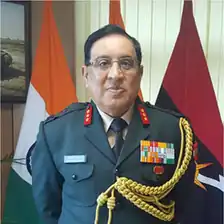
Peace in India’s Northeast cannot be understood entirely through government policies, security operations, agreements or the formal architecture of negotiations. It must also be understood through the people who have lived the conflict, those who have fought it, those who have lost loved ones to it, and those who have spent years attempting to bring its different protagonists to the negotiating table. My own understanding of this complex landscape has been shaped over many years of service in the Northeast, first as Director General of the Assam Rifles and subsequently as Chairman of the Ceasefire Monitoring Group in Nagaland.1
The transition from commanding a force deeply engaged in counter-insurgency operations to chairing an organisation tasked with monitoring ceasefires was, in many ways, a transition from dealing with the immediate manifestations of conflict to engaging with its deeper political, psychological and historical dimensions. The uniform, the weapons and the operational environment may remain familiar, but the instruments required to build peace are fundamentally different from those required to contain violence. Military operations may disrupt insurgent capabilities, restrict their freedom of movement and create conditions in which the state can reassert its authority, but the eventual transition from conflict to peace requires patience, political imagination, mutual understanding and a willingness to engage with difficult questions that cannot always be resolved through the application of force.
During my tenure as Chairman of the Ceasefire Monitoring Group, I had opportunities to engage directly with armed cadres and the leadership of Naga organisations. Meetings and interactions with Atem, Thuingaleng Muivah and Anthony, the chief of the self-styled Naga Army, as well as my visit to Hebron Camp, provided an insight into the organisation, thinking, aspirations, internal dynamics and worldview of those who had spent much of their lives within an insurgent movement. Such encounters are important because insurgencies are not sustained by weapons alone. They are sustained by narratives, identities, historical memories, political aspirations, grievances, organisational loyalties and, sometimes, generations of inherited mistrust.
Engaging with armed groups in the context of a ceasefire is neither an endorsement of their methods nor an acceptance of all their political objectives; rather, it is an acknowledgement that a conflict cannot be brought to a durable conclusion without understanding those who are part of it, the reasons that sustain their participation, and the circumstances in which they might be persuaded to abandon violence in favour of political engagement. A ceasefire creates that opportunity, but it does not guarantee that the opportunity will be utilised. My experience reinforced a fundamental distinction. The cessation of violence and the resolution of conflict are not the same thing.
The Northeast has witnessed numerous agreements, negotiations, suspensions of operations and ceasefire arrangements, which have undoubtedly contributed to periods of relative stability and prevented violence from escalating in many circumstances. Yet lasting peace requires something more profound than the absence of armed confrontation. It requires a transition in which the gun gradually loses its political relevance, communities regain confidence in institutions, young people see possibilities beyond conflict, and the state and society develop a shared stake in a peaceful future. It is this distinction between managing a ceasefire and building lasting peace that must inform India’s approach to the Northeast today.2
Ceasefires — An Opportunity, Not an End State
A ceasefire is often regarded as a significant achievement in a conflict, and rightly so, because the cessation of violence saves lives, reduces uncertainty, allows normal activities to resume and creates the space necessary for political dialogue. However, there is a danger in allowing the existence of a ceasefire to become synonymous with the achievement of peace, particularly when the underlying political disagreements remain unresolved and the institutional mechanisms created to manage the ceasefire gradually become ends in themselves.


A ceasefire is essentially an agreement to suspend violence under specified conditions, and its success must ultimately be measured by whether it facilitates a movement towards a political settlement rather than merely ensuring that armed confrontation remains contained. When dialogue loses momentum, when the parties become increasingly comfortable with the status quo, or when political engagement is reduced to periodic meetings without tangible progress, the ceasefire can begin to acquire a life of its own, creating an equilibrium in which conflict is neither resolved nor allowed to openly resurface. Such an arrangement may provide stability in the short term, but it cannot necessarily provide the foundations for enduring peace.
This is particularly relevant to the Northeast, where insurgencies have evolved over several decades, often becoming intertwined with ethnic identity, territorial aspirations, political representation, historical grievances and the complex relationship between communities and the Indian state. Each conflict has its own origins and trajectory, and therefore the solutions cannot be uniform or imposed through a standardised template. The challenge lies in recognising the distinct political and historical circumstances of each group while ensuring that the broader constitutional framework, national sovereignty and the rights of other communities remain protected.1
The objective of a ceasefire should therefore be to create conditions in which political accommodation becomes possible, institutions regain credibility and communities begin to believe that their aspirations can be pursued through peaceful means. If these outcomes are not progressively pursued, the state may find itself managing a fragile peace whose stability depends upon the continued existence of the very arrangements that were intended to facilitate its eventual resolution.
Understanding the Conflict Beyond the Armed Organisation
One of the most important lessons from prolonged insurgencies is that the armed organisation is only one component of a much larger conflict ecosystem. The insurgent leadership may articulate political demands, command armed cadres and negotiate with the government, but the conflict is also sustained, influenced or occasionally challenged by civil society, tribal institutions, community leaders, youth, religious organisations, political actors, displaced populations and people whose lives have been shaped by insecurity and uncertainty.
The challenge for a peace process is to distinguish between the leadership’s negotiating objectives and the aspirations of the larger population, because the two may overlap without necessarily being identical. An agreement that satisfies the principal armed organisation may not automatically resolve competing ethnic, territorial, political or administrative concerns within the region. Indeed, in a landscape marked by considerable ethnic diversity and overlapping claims to land, identity and political representation, the settlement of one conflict may sometimes generate apprehension among other communities if their interests and sensitivities are not adequately considered.

Peace cannot, therefore, be negotiated exclusively between the government and the armed leadership and subsequently presented to the people as a fait accompli. The process must be sufficiently inclusive to allow communities to feel that their future is being shaped through consultation rather than decided in their absence. Traditional institutions, civil society organisations, women, youth, religious leaders and local representatives must have a meaningful voice in the discussions, not necessarily as formal negotiators in every instance, but as stakeholders whose concerns are recognised and addressed.3
The legitimacy of a peace agreement will ultimately depend not merely upon the signatures of those who negotiate it, but upon the confidence of those who are expected to live with its consequences. This is particularly important in the Northeast, where identities are deeply rooted, social structures remain influential and historical memories continue to shape contemporary political attitudes.
Trust — The Most Difficult Currency of Peace
In any conflict, trust is perhaps the most difficult element to establish and the easiest to destroy. Years of insurgency, counter-insurgency operations, violence, displacement, accusations, misunderstandings and broken promises create layers of suspicion that cannot be removed through a single agreement or a change in political circumstances. Even when both sides recognise the need to move forward, their interpretation of events, their understanding of each other’s intentions and their expectations from the peace process may remain fundamentally different.
Trust cannot be demanded; it has to be built through consistent behaviour, credible commitments, the truth at all stages and the demonstration that agreements will be respected. For the government, this requires a willingness to listen to genuine grievances, ensure that administrative mechanisms function effectively and avoid creating the impression that engagement is merely tactical. For insurgent organisations, it requires the recognition that a ceasefire cannot be sustained indefinitely through ambiguity, parallel structures of authority, coercion or the continued assertion of armed power over civilian life.

The security forces have an important role in this process, but that role necessarily changes as the conflict evolves. During active insurgency, the immediate requirement is to protect the population, prevent violence, maintain security and enable the administration to function. As violence declines and political engagement becomes more meaningful, the emphasis must increasingly shift towards restraint, confidence-building, facilitating normalcy and supporting the restoration of civil institutions. The ability of security forces to adapt to this changing environment is as important as their ability to dominate the operational landscape.
My experience in the Northeast has reinforced the importance of understanding that the people with whom one engages during a ceasefire are not simply participants in a security arrangement, but individuals and organisations whose perceptions, motivations, fears and expectations have been shaped by years of conflict. Dialogue does not eliminate differences, nor does it require one side to abandon its understanding of history; it creates an opportunity to recognise that the continuation of violence may no longer serve the interests of either side or of the society in whose name the conflict is being pursued.
Political Accommodation Within a Constitutional Framework
The Northeast presents a particularly complex challenge because political aspirations often intersect with questions of identity, land, autonomy, administrative arrangements, traditional institutions and the protection of indigenous communities. These issues cannot always be addressed through conventional administrative responses, nor can they be dismissed as peripheral concerns simply because they do not conform neatly to the priorities of the national security establishment. India’s constitutional framework has demonstrated considerable flexibility in accommodating regional aspirations, whether through autonomous arrangements, special provisions, decentralised governance, the recognition of customary practices or the creation of institutions designed to respond to local circumstances. Such flexibility has been an important instrument in managing diversity and integrating regions with distinct historical and cultural identities into the national political framework.

However, constitutional accommodation must also be balanced against the interests and rights of other communities, particularly in regions where ethnic and territorial claims overlap. Any political settlement that creates a perception of exclusion, insecurity or diminished rights among other groups may inadvertently sow the seeds of another conflict. Peace negotiations must therefore be undertaken with a clear understanding of the interconnected nature of regional aspirations and the consequences that a settlement in one area may have upon neighbouring communities.
The challenge is not to dilute the constitutional framework but to utilise its flexibility imaginatively and responsibly. Political accommodation should provide space for genuine aspirations, strengthen institutions and enable communities to preserve their identities while participating fully in the larger national framework. The durability of peace will depend, in considerable measure, upon whether people believe that the constitutional and political system offers a credible avenue for pursuing their aspirations without resorting to violence.
Development Must Create Ownership, Not Dependence
Economic development is frequently presented as one of the principal instruments for addressing insurgency, and there is considerable merit in this approach, particularly in regions where geographical isolation, limited infrastructure, inadequate employment opportunities and uneven access to public services have contributed to a sense of marginalisation. Roads, bridges, telecommunications, education, healthcare and connectivity are essential to improving the quality of life and integrating remote communities with wider economic opportunities.
However, development cannot be reduced to the construction of infrastructure or the expenditure of funds. A road may connect a remote village to the outside world, but it does not necessarily address the aspirations of the young people who live there. A school may exist, but unless it provides meaningful education and pathways to employment, it may fail to generate the confidence that development is intended to create. Similarly, infrastructure projects may transform the physical landscape without necessarily changing the relationship between the state and the local population.
The real measure of development must be the extent to which it creates local ownership, employment, entrepreneurship, opportunity and confidence. The people of the Northeast must not merely become beneficiaries of development; they must become its principal participants, its entrepreneurs, its skilled workforce and its decision-makers. The region’s rich cultural heritage, biodiversity, tourism potential, agricultural capabilities, handicrafts, knowledge systems and strategic location offer opportunities that can be harnessed to create economic activity without undermining its social and environmental foundations.
Development must also be sensitive to local identities, land ownership patterns, customary institutions and community concerns. The experience of other regions demonstrates that development imposed without adequate consultation may generate resistance rather than acceptance. The objective should be to create an environment in which development and identity reinforce one another, enabling communities to see economic progress as an opportunity to preserve and strengthen their way of life rather than as a threat to it.
The Youth and the Future of Peace
No peace process can succeed if it remains primarily an exercise involving political leadership, government representatives, security establishments and insurgent organisations while the aspirations of the younger generation remain inadequately addressed. The Northeast has a young population, increasing exposure to the rest of India and the world, growing educational aspirations and a generation that is increasingly connected through digital platforms, yet the opportunities available to them do not always match their expectations.
For many young people, the conflict may not be a direct personal experience in the same way it was for their parents or grandparents, but its consequences remain embedded in the social and political environment in which they grow up. They inherit the narratives, grievances, identities and memories of earlier generations, even as their aspirations are shaped by education, employment, technology, entrepreneurship and a desire to participate in a wider world. This creates both an opportunity and a challenge for the peace process.
The opportunity lies in the possibility of building a generation that sees its future through education, innovation, enterprise, mobility and democratic participation rather than through conflict. The challenge is to ensure that the absence of violence is accompanied by the presence of meaningful opportunities. If young people remain unemployed, alienated, frustrated or convinced that their aspirations cannot be realised within existing institutions, the underlying conditions that sustain political discontent may persist even when the guns have fallen silent.
Education must consequently be viewed as more than an instrument of literacy or professional qualification. It must build confidence, critical thinking, social cohesion and the ability to engage constructively with differences. Skill development, entrepreneurship, sports, cultural exchange, tourism, digital employment and access to wider economic networks can help create pathways that make peace tangible in the lives of ordinary people. The success of a peace process will ultimately be reflected in whether the younger generation has greater freedom, opportunity and confidence than the generation that preceded it.
The Cross-Border Dimension of Peace
The Northeast cannot be viewed in isolation from its geographical and geopolitical environment. Its international boundaries, ethnic linkages, historical connections, trade routes and proximity to Myanmar, Bangladesh, Bhutan and China create a complex landscape in which internal security and external developments are closely interconnected. The instability in Myanmar, in particular, has implications for border management, insurgent movement, weapons proliferation, narcotics trafficking, refugee flows and the broader security environment along India’s eastern frontier.
Insurgent organisations have historically exploited porous borders, difficult terrain and transnational ethnic connections to sustain their activities, while external political developments have sometimes provided opportunities for sanctuary, movement, support or logistical networks. The changing situation in Myanmar has further complicated this environment, creating challenges that cannot be addressed through conventional border management alone.4
At the same time, the Northeast’s geographical location offers enormous potential. The region can become an important bridge between India and Southeast Asia through connectivity, trade, cultural exchange, tourism and economic integration. India’s Act East Policy will achieve its full potential only when the Northeast becomes an active participant in the economic and strategic opportunities that emerge from this connectivity.2
The challenge is to ensure that external connectivity does not become a security vulnerability and that the opening of economic and transport corridors is accompanied by appropriate institutional capacity, border management, local participation and safeguards. Peace within the Northeast and stability across its international borders must increasingly be viewed as mutually reinforcing objectives. A region that is secure, economically confident and politically stable is better placed to serve as India’s gateway to Southeast Asia and as an important component of its wider strategic vision.
Information, Perception and the Changing Nature of Conflict
The nature of insurgency has also changed considerably with the expansion of digital communication, social media and the ability of competing actors to influence perceptions across geographical boundaries. Information is no longer merely a supporting element of conflict; it has become an arena in which legitimacy, credibility, identity and political narratives are continuously contested. Events on the ground may be interpreted, amplified, distorted or selectively presented to audiences far removed from the immediate conflict environment.
The Northeast, with its complex ethnic, political and historical landscape, is particularly vulnerable to the rapid spread of misinformation, provocative narratives and the manipulation of local grievances. A misunderstanding that might once have remained confined to a village or district can now acquire a wider political dimension within hours, potentially affecting community relations, public confidence and the credibility of institutions.
The response cannot simply be to counter information through official messaging. Credibility is built through transparency, timely communication, accountability and the willingness to acknowledge mistakes. Government institutions, security forces, civil society and local leadership must recognise that the information environment is shaped not merely by what they communicate, but by the trust that audiences place in them. The ability to listen, engage and respond with sensitivity is increasingly as important as the ability to disseminate information.
Peace must therefore include a conscious effort to prevent the manipulation of social divisions and to build resilience within communities. This requires strengthening local leadership, encouraging responsible communication, creating channels for grievance redressal and ensuring that misinformation does not become a substitute for dialogue or a catalyst for renewed conflict.
Reconciliation — The Missing Dimension
Political agreements and ceasefires can establish the framework for peace, but reconciliation is the process through which peace acquires a human dimension. Prolonged conflict leaves behind wounds that are not always visible, including loss, trauma, suspicion, displacement, disrupted families, damaged relationships and memories of violence that may continue to influence communities long after the immediate conflict has ended. These cannot be addressed simply through administrative orders or the announcement of a political settlement.

Reconciliation does not necessarily mean forgetting the past or abandoning the grievances that have shaped a conflict. Nor does it require every participant to agree upon a common interpretation of history. It requires the willingness to recognise the suffering of others, acknowledge the consequences of violence, create opportunities for dialogue and gradually rebuild relationships that have been damaged by years of mistrust.
Traditional institutions, community leaders, religious organisations, civil society and local administration can play an important role in this process, particularly where they retain the confidence of the people. Community-level engagement, opportunities for dialogue, support for affected families, rehabilitation, the restoration of livelihoods and the reintegration of those who wish to move away from violence can contribute to a gradual transformation of the conflict environment.
The objective must be to create a society in which peace is not dependent solely upon the continued enforcement of an agreement, but is sustained by the collective desire of communities to protect what they have gained and to prevent a return to violence. This is perhaps the most difficult stage of any peace process, because it requires a change in attitudes, perceptions and relationships that cannot be achieved through a deadline or a formal agreement.
From Managing Conflict to Building Peace
India’s experience in the Northeast demonstrates that insurgencies cannot be addressed through a single instrument, nor can their resolution be achieved through a uniform approach. Security operations, political dialogue, constitutional accommodation, development, governance, community engagement and external diplomacy must function as complementary elements of a broader strategy. The sequencing and emphasis may differ from one conflict to another, but the underlying objective must remain the same — to create conditions in which violence becomes increasingly irrelevant to the pursuit of political, social and economic aspirations.

The security forces and in particular the Assam Rifles must continue to have an important role in ensuring stability, protecting the population and preventing the resurgence of violence, but lasting peace requires that the state progressively strengthen the institutions that enable ordinary people to live without fear and pursue their aspirations. Governance must be responsive, political engagement must be credible, development must be inclusive and the administration must be sufficiently sensitive to local realities to recognise that the legitimacy of the state is built as much through everyday interactions as through its formal authority.
The challenge for policymakers is to avoid viewing peace as a final event marked by the signing of an agreement, while instead recognising it as a continuing process that requires sustained political attention, institutional commitment and the ability to adapt as circumstances change. Ceasefires may provide the beginning of this process, but they cannot substitute for it. Their success must be measured by the extent to which they progressively reduce the relevance of armed organisations, strengthen civilian institutions, expand opportunities and create confidence among communities that their future is secure.
Conclusion
The Northeast has travelled a considerable distance from the years when insurgency, insecurity and armed confrontation dominated the lives of many communities. Ceasefires, political engagement, improved connectivity, development initiatives and the gradual strengthening of institutions have created opportunities that must not be squandered. Yet the journey from the absence of violence to the presence of enduring peace remains unfinished.
My experience in the region, both as Director General of the Assam Rifles and subsequently as Chairman of the Ceasefire Monitoring Group, has convinced me that the most difficult part of peace is often not bringing people to the table, but ensuring that they remain committed to the possibilities that emerge from the dividends of peace. Dialogue requires patience, trust requires consistency and political settlements require the courage to address difficult questions without allowing differences to become reasons for renewed violence. Equally, those who have carried arms must recognise that the future of their people cannot indefinitely be held hostage to the continuation of armed struggle, and that the legitimacy of political aspirations is best secured through peaceful, democratic and constitutional means.
The Northeast needs more than the absence of insurgency; it needs the presence of opportunity, dignity, justice, trust and belonging. Its people must feel that they are not on the margins of India’s political and economic imagination, but are integral to the country’s future and capable of shaping it. The region’s diversity should be viewed not as a challenge to be managed, but as an asset to be nurtured, while its strategic location should translate into tangible opportunities for its communities rather than merely serve as a consideration in national security planning.
Ceasefires can stop the guns, and agreements can create the framework for political engagement, but lasting peace will emerge only when communities begin to believe that they have more to gain from coexistence than from conflict, and that their aspirations can be realised without violence. The ultimate objective must be to ensure that peace is no longer dependent upon the continued management of armed groups, but upon the collective confidence of the people in their political, economic and social future.
That is the transition the Northeast must continue to make — from ceasefires to confidence, from conflict management to political reconciliation, and from a fragile peace maintained by arrangements to a lasting peace sustained by its people.
Editorial references
Added by The Raisina Post for the author’s review. References provide historical or methodological context; they do not independently authenticate personal recollections or imply endorsement of the author’s judgments.
- Shokin Chauhan. The Naga Conundrum and the Way Forward. NDC Journal, Kuutneeti, Summer 2021, p. 151 onwards. Author’s earlier research on regional diversity and Naga political history; the author note records both service appointments.
- Press Information Bureau. Northeast development and peace initiatives. Government of India, June 2025. Government account of the 2015 Naga framework agreement and subsequent regional accords, including the 2024 Tripura settlement; official reporting, not independent proof of causal effects.
- United Nations Department of Political and Peacebuilding Affairs. United Nations Guidance for Effective Mediation. 2012 guidance. Identifies inclusivity, national ownership and quality peace agreements as fundamentals of mediation.
- Shokin Chauhan. Myanmar Insurgencies: Impact on Northeast India. Defence Research and Studies, 21 October 2024; reproduced from Chanakya Forum. Author’s earlier analysis of cross-border instability, humanitarian concerns and connectivity risks.