

THE POWER BRIEF . MORNING EDITION
Rubio puts trade and energy at the centre of India visit
The Power Brief | 21 October 2026 | Trade diplomacy, energy, markets and rural employment
“We’re – we feel very optimistic that we will have something in place here very soon.”
— Marco Rubio on US–India trade negotiations, Mumbai, 20 October 2026; State Department transcript via Forth
Good morning. India begins Wednesday with trade diplomacy and energy security sharing the agenda. Marco Rubio has signalled progress towards a US trade agreement, while a separate pact with New Zealand has entered into force. At home, Jio Platforms is scheduled to open its public offer, and Tamil Nadu has approved funding for additional rural employment. Here is what is established, and what remains to be demonstrated.
Rubio signals progress as energy talks approach
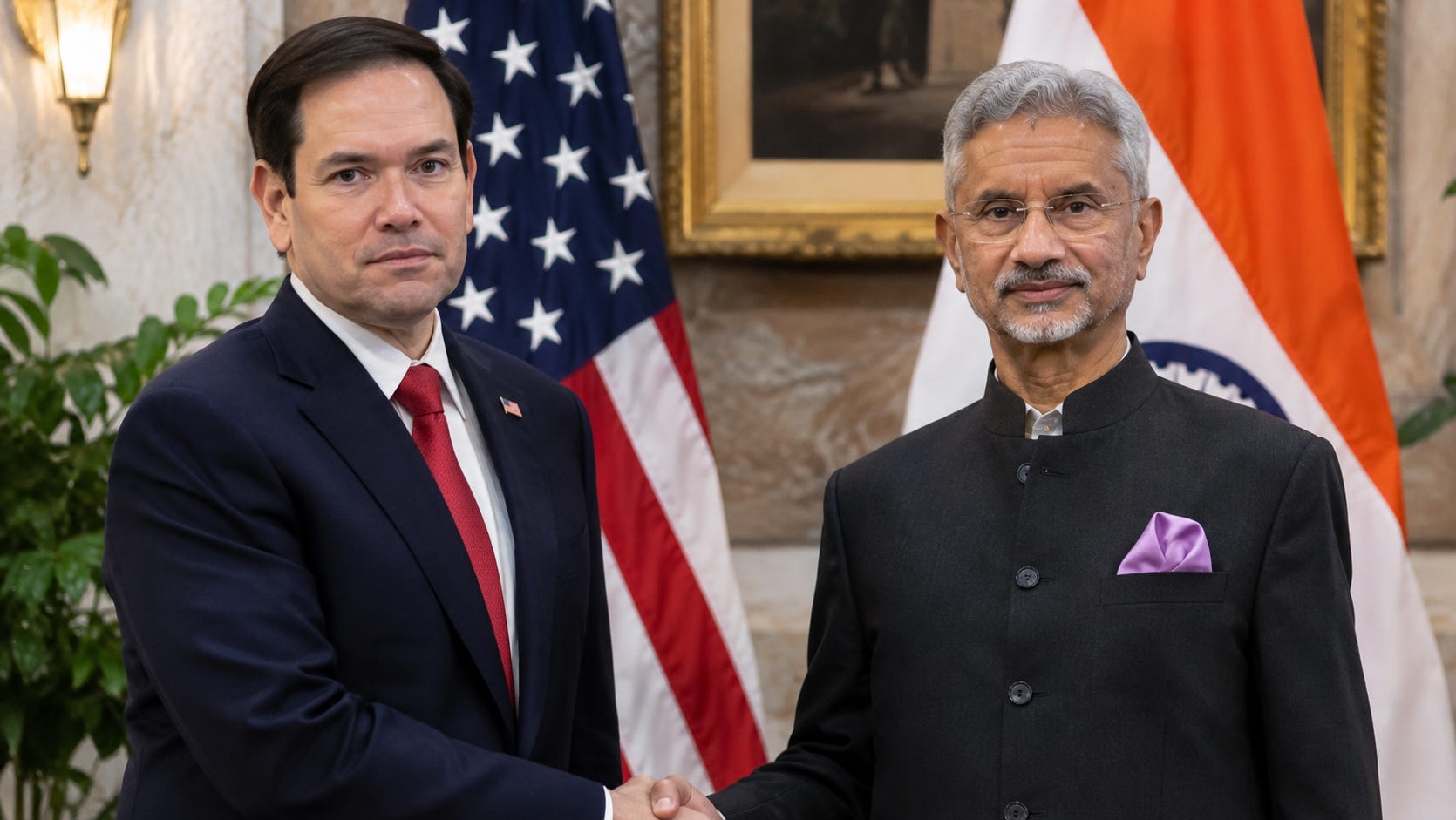
US Secretary of State Marco Rubio met External Affairs Minister S. Jaishankar in Mumbai on Tuesday, with trade, energy and defence cooperation on the agenda, according to a PTI report published by Rediff. The report said both sides welcomed progress in negotiations and reiterated their commitment to an early conclusion of a bilateral trade agreement.
Rubio said a small number of issues remained, according to a State Department transcript republished by Forth. He expressed optimism about an agreement but did not provide a firm signing date in those remarks. He also acknowledged that his department does not negotiate trade agreements. His comments therefore establish Washington’s stated expectation, rather than the final terms or legal effect of a deal.
The visit now moves towards energy. Rubio is scheduled to visit Reliance Industries’ Jamnagar refinery on Wednesday, PTI reported. Before his talks with Jaishankar, he advocated greater processing of Venezuelan crude in India.
In the transcript, Rubio said Indian companies had the capacity to refine heavy crude, while acknowledging that sanctions-related impediments would need to be addressed. He described further discussions with Reliance as an opportunity to examine what was holding activity back. Those remarks are not a purchase commitment, a sanctions authorisation or confirmation of additional shipments.
The two conversations concern different sources of uncertainty for Indian businesses: access to export markets and access to energy inputs. Diplomatic progress becomes commercially meaningful when it produces usable terms, implementation dates and workable transactions. Until then, companies cannot reliably price in a tariff concession or assume that a proposed supply arrangement will proceed.
The next useful evidence will be specific: a jointly announced trade outcome, published terms, or an identified commercial or regulatory step following the refinery discussions. A warmer bilateral tone may help negotiations, but it cannot establish their result. Today’s coverage should follow what changes on paper and in practice, alongside what officials say.
New Zealand trade agreement takes effect
The India–New Zealand free trade agreement entered into force on 20 October, New Zealand’s foreign ministry confirms. India’s commerce ministry said it gives Indian goods duty-free access to the New Zealand market, with rules of origin and safeguards governing the arrangement.
Access in the other direction is phased. New Zealand Trade Minister Todd McClay said almost 57% of his country’s exports to India became tariff-free immediately, rising to 82% over time. A second round of tariff reductions is scheduled for 1 January 2027.
Entry into force is a firmer milestone than an announcement that negotiations are close. Exporters can now examine the agreement against their actual products and shipments. The practical test is whether eligible firms use the preferences, meet documentation requirements and secure orders. Expanded market access creates an opportunity; the resulting sales still have to be earned.
Jio’s public offer is scheduled to open
Jio Platforms’ ₹30,187.6-crore initial public offering is scheduled to open on Wednesday and close on 23 October, Moneycontrol reported. The price band is ₹1,065–₹1,119 a share. The company raised ₹8,109.84 crore from 212 anchor investors on 19 October, according to the report.
Moneycontrol said ₹27,500 crore of net proceeds would go towards repaying part of subsidiary Reliance Jio Infocomm’s borrowings, with remaining funds for general corporate purposes.
Anchor allocation is not public subscription, and neither establishes the eventual trading price. Today’s useful indicators will be disclosed participation across investor categories and any updated offer information. The allocation of proceeds also matters: debt repayment changes a balance sheet, while spending on new projects serves a different purpose. Describing both simply as money for expansion would obscure that difference.
Tamil Nadu funds additional rural work
Tamil Nadu has approved ₹100 crore for an additional 25 days of wage employment for eligible rural households completing 125 days under the Centre’s VB-G RAM G scheme, PTI reported on Tuesday. The state-funded provision, under the “VETRI 150” account, extends support to as many as 150 days.
Priority groups include women-headed households, single women, households with persons with disabilities, and Scheduled Caste and Scheduled Tribe households. The report said disbursement was authorised across districts excluding Chennai.
Funding approval does not show how many households will obtain the extra work or when wages will reach them. The next assessment should examine eligibility instructions, work availability, actual person-days generated and payment records. Those measures will distinguish the announced entitlement from the support households receive.
The institutional lens — analysis
There is a useful distinction across these developments between permission, resources and delivery. A trade agreement can permit preferential access; firms still need customers and the ability to supply them. A public offer can mobilise money; its use must be assessed separately. A welfare allocation can fund work; local administration must make that work available and pay for it.
These are different processes, with different evidence. The responsible follow-up is to identify the next accountable institution and its measurable task. That approach also guards against two reporting errors: declaring success at the announcement, or declaring failure before implementation can reasonably be assessed.
What to watch
Wednesday, 21 October: Follow the outcome of Rubio’s planned Jamnagar visit. Separate exploratory statements from signed commitments and any published authorisations. For the trade negotiations, look for a joint announcement and terms rather than treating another expression of optimism as completion.
Through Friday, 23 October: Track Jio’s subscription disclosures against its reported offer timetable. Avoid treating early demand, applications or anchor participation as predictions of returns.
Beyond the announcements: Watch for evidence that exporters are using the New Zealand preferences and that Tamil Nadu is delivering the additional work. Across today’s stories, the next development worth reporting is the step that turns an announced opportunity into an observable outcome.
Prepared from public documents and attributed published reporting. No interviews or on-the-ground reporting are claimed. Interpretation is labelled within the brief.
Information cutoff: 6:20 AM IST, 21 October 2026. This edition retains its original reporting timeframe.
Sources
1. PTI/Rediff
https://m.rediff.com/news/report/rubio-lands-in-india-amid-trade-strains-seeks-to-reset-economic-ties/20261020.htm
2. Transcript via Forth
https://www.forth.news/lists/state/CgDfEzTUFVZhtxt8XwpTq
3. New Zealand foreign ministry
https://www.mfat.govt.nz/en/trade/free-trade-agreements/free-trade-agreements-in-force/new-zealand-india-free-trade-agreement
4. India’s commerce ministry
https://www.pib.gov.in/PressReleseDetailm.aspx?PRID=2325235&lang=1®=3
5. New Zealand government
https://www.beehive.govt.nz/release/india-fta-now-open-business
7. PTI/Moneycontrol
https://www.moneycontrol.com/news/india/tamil-nadu-govt-sanctions-additional-25-days-of-wage-employment-under-vb-g-ram-g-scheme-14055908.html

The next briefing, in your inbox
The Raisina Post’s Editorial Desk sends a clear account of the decisions, data and global moves shaping India each morning. Subscribe free, or share this edition with someone who follows the story.