

THE POWER BRIEF . MORNING EDITION
Rupee posts its best month since February as India’s reserves fall for seventh week
The Power Brief | 31 October 2026 | Rupee and reserves, GST changes, digital fraud safeguards and a narrow market rally
On 30 October, the rupee completed its strongest month since February, even as India’s foreign-exchange reserves declined for a seventh consecutive week. GST changes are set to take effect on 1 November, the Supreme Court pressed for stronger bank accountability in digital fraud cases, and Indian shares rose despite losses among smaller companies. ¹ ² ⁶ ⁸ ⁹
“India’s FX reserves dip for seventh straight week to hit over two-month low.” — Reuters headline, 30 October 2026, read the report.
The rupee’s recovery and the decline in reserves offer different measures of India’s external financial position. Neither establishes whether the pressure on dollar demand has eased. The other developments raise questions about implementation and accountability: how quickly GST changes will benefit businesses, what safeguards banks must provide against fraud, and whether the equity market’s recovery extends beyond its largest companies.
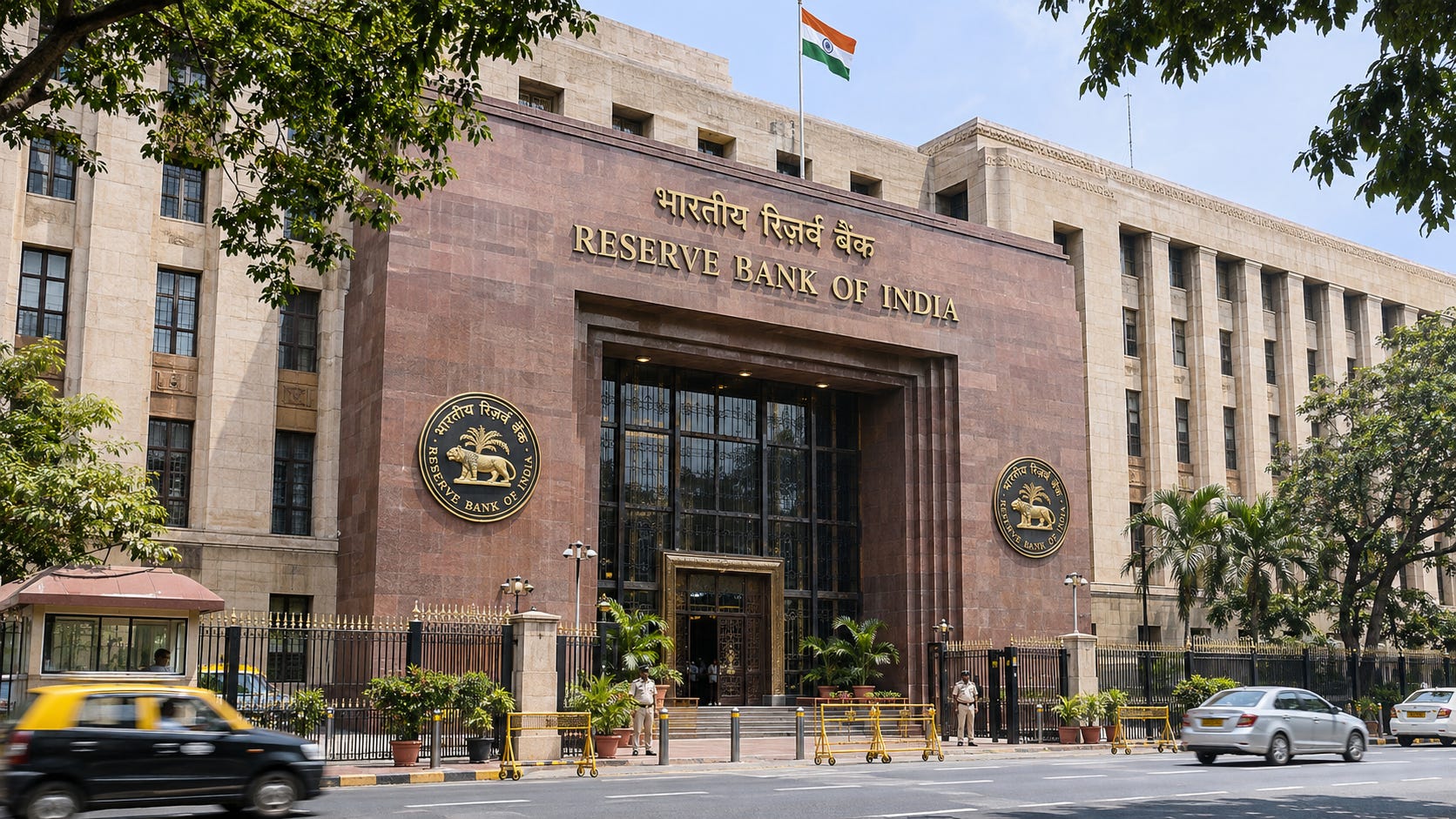
The rupee strengthens, but India’s reserve cushion keeps shrinking
Key facts
Rupee: approximately ₹94.95 against the US dollar at Friday’s close, compared with ₹95.26 in the previous session. ¹
Monthly performance: the currency gained roughly 1% in October, its strongest month since February 2026. ¹
Foreign-exchange reserves: $719.75 billion for the week ended 23 October, down approximately $1.27 billion from the previous week. ²
Consecutive declines: seven weeks, taking reserves approximately $65.96 billion below the record $785.71 billion reached in early September. ²
Reserve composition: gold holdings fell by roughly $2.6 billion to $103.15 billion, while foreign-currency assets rose by approximately $1.3 billion to $593.2 billion. ²
Two developments reported on Friday, 30 October, offer different readings of India’s external financial position.
Reuters reported that the rupee recorded its best monthly gain in eight months, supported by regulatory measures introduced by the RBI to manage dollar demand. These included changes affecting foreign-exchange transactions and direct dollar supply arrangements with public-sector oil marketing companies. ¹
The measures have become increasingly important amid elevated international crude oil prices, which raise the cost of India’s imports and increase demand for dollars.
The currency’s recovery, however, coincided with continued pressure on the RBI’s foreign-exchange reserves.
Data reported on Friday showed total reserves falling to approximately $719.75 billion for the week ended 23 October. The latest decline extended a sequence that began after reserves reached a record $785.71 billion in early September. ²
The difference between those two levels is approximately $65.96 billion, equivalent to 8.4% of the September peak (our calculation).
That decline should not be treated as a direct measure of dollars sold in market intervention. Reserve totals also change because of valuation movements in gold and foreign-currency holdings, alongside other central-bank operations.
The latest weekly breakdown illustrates this distinction. Although the total reserve position declined, foreign-currency assets actually increased. A substantial reduction in the dollar value of gold holdings outweighed that increase. ²
Reuters also reported that earlier measures to attract overseas capital, including foreign-currency deposits, supported the reserve position. Such arrangements can strengthen reported spot reserves while creating future repayment or swap obligations. ²
Analysis: The rupee’s October performance demonstrates that policy intervention can influence currency conditions even when external pressures remain elevated. But the direction of the exchange rate alone does not establish whether the underlying demand for dollars has eased.
The more useful test is whether reserves stabilise, imported energy costs moderate and foreign capital flows improve without requiring continued exceptional support.
Next milestone: The RBI’s next weekly foreign-exchange reserve release, expected on Friday, 6 November, will show whether the sequence of declines continues. The figures will cover an earlier reporting week and should not be confused with the release date.
GST rules change on 1 November, with implications for discounts and refunds
Key facts
Effective date: 1 November 2026. ⁴
Legal instrument: Notification No. 03/2026–Central Tax, dated 26 October 2026. ⁴
Legislation: Sections 153 to 155 of the Finance Act, 2026. ⁵
Post-supply discounts: the previous requirement for a pre-existing agreement and specific invoice linkage is removed, subject to revised statutory conditions. ⁵
Refunds: the provisional refund facility of up to 90% is extended to eligible claims arising from an inverted duty structure. ⁶
Exports: the ₹1,000 minimum refund restriction is removed for eligible goods exported with payment of tax. ⁵
India will implement a set of changes to its Goods and Services Tax framework on Sunday, 1 November, following a notification issued by the Central Board of Indirect Taxes and Customs on 26 October. ⁴
The amendments affect how businesses account for discounts granted after a sale and how certain GST refund claims are processed.
Under the previous Section 15(3)(b) framework, excluding a post-supply discount from taxable value required, among other conditions, an agreement established before or at the time of supply and linkage to relevant invoices.
The amended provision removes those two conditions. Instead, a supplier must issue an appropriate credit note, and the recipient must reverse the input tax credit attributable to the discount in accordance with Section 34. ⁵
This could simplify the GST treatment of retrospective volume discounts and other commercial arrangements where the final discount is determined after supply.
The changes also address working capital locked in accumulated input tax credits.
Where an inverted duty structure results in eligible unutilised input tax credit, the law extends access to a provisional refund of up to 90%, subject to applicable conditions and procedures. ⁶
An inverted duty structure generally arises when the tax rate on eligible inputs exceeds the rate on the outward supply, leading to accumulated credit.
For qualifying businesses, earlier provisional refunds could reduce the time capital remains tied up during the processing of claims.
A separate amendment removes the ₹1,000 minimum refund threshold for goods exported with payment of tax. ⁵
The notification is important partly because it establishes a specific commencement date. It does not mean every recommendation made at the GST Council’s October meeting becomes operational on the same day.
Analysis: These changes target the administrative cost of GST rather than broadly reducing tax rates. For businesses, the financial benefit will depend on whether revised credit-note documentation and refund procedures work reliably in practice.
A statutory entitlement does not automatically guarantee immediate receipt of a refund. Processing requirements, verification and the relevant GST portal workflows will continue to matter.
Next milestone: The amendments take effect on 1 November 2026. Businesses and tax advisers will be watching for operational clarifications and how the revised provisions are applied to transactions and refund claims.
Supreme Court presses for bank compensation when digital fraud involves negligence
Key facts
Proceeding: a Supreme Court suo motu matter concerning digital arrest and related cyber fraud.
Bench: Chief Justice Surya Kant and Justices Joymalya Bagchi and V Mohana.
Hearing: 29 October 2026. ⁷
Compensation: the Court said the RBI’s proposed rules must provide for compensation of at least the amount lost where a financial institution’s failure of due diligence caused the loss. ⁷
Prevention: safeguards discussed include temporarily stopping unusual transactions, automated reporting and additional verification. ⁸
Regulatory timetable: the proposed RBI directions are expected to be notified by 30 November and operationalised by 31 December, according to PTI reporting. ⁸
The Supreme Court has called for a regulatory framework that makes banks and other financial institutions accountable when failures in their own due diligence contribute to digital fraud.
During proceedings on 29 October, the bench examined the response to scams in which criminals impersonate police officers or judicial authorities and manipulate victims into transferring money. ⁷
The Court’s position goes beyond public awareness campaigns. It seeks enforceable responsibilities for financial institutions that process suspicious transactions.
The bench said compensation should be no less than the customer’s loss where an investigation establishes that the fraud resulted from the institution’s failure to exercise due diligence. ⁷
The distinction matters.
The Court was not announcing an unconditional guarantee that every customer who loses money to cyber fraud will automatically receive reimbursement. The compensation requirement it called for is tied to an established failure by the financial institution.
The proceedings also focused on preventive intervention.
A bank could be expected to detect transactions inconsistent with an account’s established pattern and apply additional checks before allowing unusually large or suspicious transfers to proceed.
According to legal reporting, the Court discussed transaction monitoring, temporary suspension, automated alerts and physical verification where necessary. ⁷
The RBI is preparing amendments to its Know Your Customer regulatory framework, and the Court intends to examine the proposed directions before they are notified. ⁸
PTI reported that the bench also sought a list of authorised financial institutions from the RBI, enabling directions to apply across the relevant institutions rather than only to individual banks named in proceedings. ⁸
Analysis: The proposed approach could shift part of the responsibility for preventing fraud from customers to the institutions controlling payment infrastructure.
That is a significant regulatory question. If compensation becomes an enforceable consequence of institutional negligence, transaction monitoring and escalation systems become matters of financial liability rather than optional customer-protection practices.
The unresolved question is how the final framework will define failure of due diligence, establish causation and determine compensation.
Next milestone: The next Supreme Court hearing is scheduled for 30 November 2026. The proposed RBI notification and its eventual implementation will determine which obligations become operational.
The Nifty returns above 23,000, but smaller stocks tell another story
Key facts
Sensex: rose 308.49 points, or 0.42%, to close at 74,459.53 on Friday, 30 October.
Nifty 50: gained 116.35 points, or 0.51%, to close at 23,053.10.
Nifty IT: advanced more than 2%, making it the leading sectoral gainer in NDTV Profit’s closing report.
Nifty Midcap 100: fell 0.93%.
Nifty Smallcap 100: declined 1.85%.
Market direction: both benchmark indices rose for a second consecutive session. ⁹ ¹⁰
Indian equity benchmarks ended the final trading session of October higher, extending Thursday’s recovery.
The Sensex closed at 74,459.53, while the Nifty 50 reclaimed the 23,000 level. Buying in major information technology companies, alongside gains in pharmaceutical and healthcare stocks, helped support the indices. ⁹
But the closing numbers concealed considerable weakness elsewhere in the market.
The Nifty Midcap 100 fell 0.93%, while the Smallcap 100 declined 1.85%. Several other sectoral indices also finished lower, even as the headline benchmarks advanced. ¹⁰
This produced a pronounced difference between the performance of India’s largest listed companies and that of smaller businesses.
According to NDTV Profit, technology shares led the sectoral advance, while auto, FMCG, metals, realty, public-sector banks and oil-and-gas indices were among the weaker segments. ⁹
The recovery followed a volatile week shaped by international energy prices, US monetary policy and quarterly corporate earnings.
Elevated crude prices remained an important external risk for India, given the country’s dependence on imported oil.
The rupee’s October appreciation offered one positive signal, but it did not eliminate the cost pressures arising from expensive energy imports.
Friday was also a significant corporate earnings date, with Reliance Industries, Jio Platforms and numerous other listed companies scheduled to report September-quarter results. Their final earnings figures were not verified within this briefing’s information cutoff. ⁹
Analysis: A rising Nifty does not necessarily indicate a broad recovery across the equity market.
When large companies lift the benchmark while smaller stocks decline, the index may give a more favourable impression than the experience of investors holding a wider range of shares.
The next test will be whether buying extends beyond heavyweight companies and whether corporate earnings support the recovery.
Next milestone: Indian equities are next scheduled to trade on Monday, 2 November 2026, following the weekend. Market breadth, crude prices and reactions to late-Friday corporate results will be important indicators. This is not investment advice.
The day ahead
31 October — Delhi’s weather: the India Meteorological Department’s forecast, as reported on 30 October, indicated partly cloudy conditions after heavy rainfall. Delhi recorded 61.4 mm of rain in the 24 hours ending Friday morning, while its AQI improved to 90 at 9:30 a.m. from 222 the previous afternoon. This is an observed short-term improvement, not evidence of a sustained reduction in emissions. ¹¹ ¹²
1 November — GST commencement: changes to post-supply discounts, credit notes and eligible GST refund provisions are due to take effect. ⁴
2 November — Indian markets reopen: investors will assess the sustainability of the large-cap recovery and the extent of weakness in mid- and small-cap stocks. ¹⁰
6 November — RBI reserves: the next weekly foreign-exchange reserve figures are expected, providing another measure of the reserve position.
30 November — Digital fraud regulation: the next scheduled Supreme Court hearing and the reported target date for RBI notification of the proposed safeguards. The regulatory timetable remains subject to the process. ⁸
Sources
Reuters, Rupee posts best month in eight on RBI measures to curb dollar demand (30 October): https://www.reuters.com/world/india/rupee-benefit-dollar-retreat-plunging-us-yields-oil-surge-tempers-impact-2026-10-30/
Reuters, India’s FX reserves dip for seventh straight week to hit over two-month low (30 October): https://www.reuters.com/world/india/indias-fx-reserves-dip-seventh-straight-week-hit-over-two-month-low-2026-10-30/
ThePrint / PTI, India’s forex reserves decline USD 5 bn to USD 721 bn (23 October; historical comparison): https://theprint.in/economy/indias-forex-reserves-decline-usd-5-bn-to-usd-721-bn/3079822/
Ministry of Finance / CBIC, Notification No. 03/2026–Central Tax (26 October; gazette record): https://gazettetracker.com/g/CG-DL-E-27102026-277441
LKS Attorneys, CGST Act amendments by Sections 153 to 155 of the Finance Act, 2026 (29 October): https://www.lkslaw.com/insights/updates/indirect-tax-update/cgst-act-2017-amendments-by-sections-153-to-155-of-the-finance-act-2026-effective-from-1-november-2026
Business Today, Finance ministry notifies key GST changes from November 1 (27 October): https://www.businesstoday.in/latest/economy/story/finance-ministry-notifies-key-gst-changes-from-november-1-564094-2026-10-27
Bar & Bench, Supreme Court to vet RBI’s digital fraud regulations before notification (29 October): https://www.barandbench.com/news/litigation/supreme-court-to-vet-rbis-digital-fraud-regulations-before-notification-says-banks-must-compensate-victims
NDTV / PTI, Banks must pay digital fraud victims if due-diligence failure is found (30 October): https://www.ndtv.com/india-news/banks-must-pay-digital-fraud-victims-if-due-diligence-failure-is-found-supreme-court-12257303
NDTV Profit, Market Wrap: Sensex gains 308 points, Nifty ends above 23,000 (30 October): https://www.ndtvprofit.com/markets/stock-market-today-october-30-sensex-today-nifty-50-open-higher-despite-brent-crude-at-116-ril-q2-jio-platforms-earnings-fii-iran-war-12256952
HDFC SKY, Sensex, Nifty rise; IT and pharma lift markets as midcaps slide (30 October): https://hdfcsky.com/news/market-close-report-today-october-30-2026-nifty-sensex-rise-for-second-straight-session
The Indian Express, Delhi’s air turns satisfactory after record October rain in four years (30 October): https://indianexpress.com/article/cities/delhi/delhis-air-turns-satisfactory-after-record-october-rain-in-4-years-10943383/
India Today, Delhi-NCR rain lowers temperature and improves AQI as IMD forecasts thunderstorms (30 October): https://www.indiatoday.in/science/story/delhi-ncr-rain-lowers-temperature-improves-aqi-imd-thunderstorm-forecast-3028162-2026-10-30
Updated: Evening, 30 October 2026 (IST). Corrections: none.
This brief draws on public documents, reported financial data and attributed journalism. It includes no original interviews or on-the-ground reporting. Interpretations are explicitly labelled as analysis. Information cutoff: approximately 6:30 p.m. IST, 30 October 2026. Late-evening financial results and subsequent developments are not included.

The next briefing, in your inbox
The Raisina Post’s Editorial Desk sends a clear account of the decisions, data and global moves shaping India each morning. Subscribe free, or share this edition with someone who follows the story.